

30th Oct 2026

Shital Pawar
Writer & Blogger
Share on :
Introduction
Running a banquet hall is about more than offering a beautiful venue. Whether customers are planning weddings, birthday parties, corporate events, or family celebrations, they usually start their search online.
If your banquet hall isn’t visible on Google or social media, potential customers may choose your competitors instead.
This is where digital marketing for banquet halls becomes important. A well-planned digital strategy helps your venue reach the right audience, generate enquiries, and turn online visitors into confirmed bookings.
1. Build a Professional Website for Your Banquet Hall
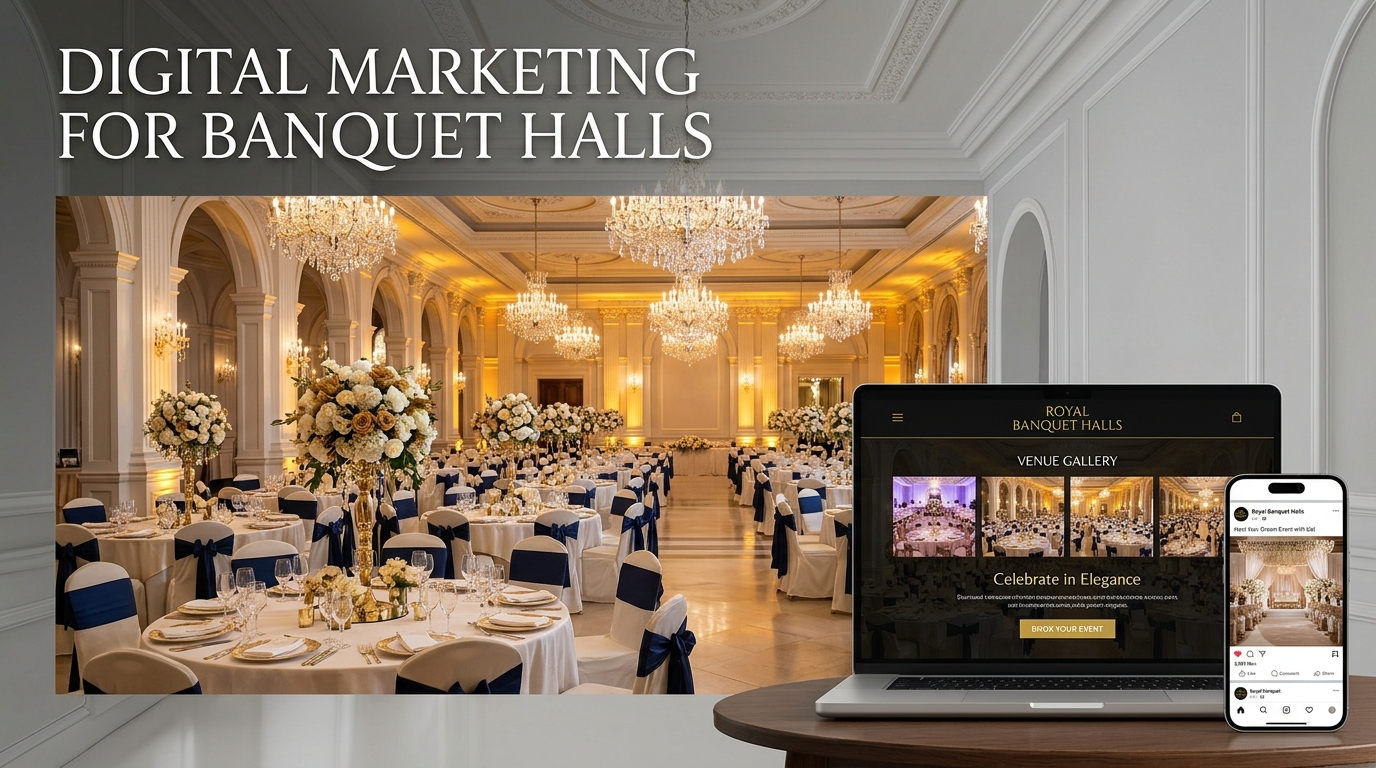
Your website is often the first impression potential customers have of your venue.A professional banquet hall website should include:
A professional banquet hall website should include:
High-quality photographs of your venue.
Wedding and event decoration galleries.
Seating capacity and venue facilities.
Packages and pricing information.
Location and Google Maps integration.
Easy enquiry and WhatsApp buttons.
2. Explore Their Portfolio in Detail
An agency’s portfolio is the most reliable way to evaluate their capabilities. Look beyond just pretty designs—check whether the websites they’ve built are functional, modern, and aligned with user experience best practices.
While reviewing their work:
- Examine websites they’ve built in your industry (if any)
- Click through their live projects to test speed, navigation, and mobile responsiveness
- Look for variety: Can they build both simple and complex platforms?
3. Evaluate Their Technical Capabilities
The web development world involves more than just coding. Depending on your goals, you might require expertise in:
Here’s what good navigation includes:
- Content management systems (WordPress, Drupal)
- Custom frameworks (Laravel, Django)
- Front-end tech (React, Vue.js)
- Backend development (Node.js, PHP)
- eCommerce platforms (Shopify, WooCommerce)
A capable agency should be able to suggest the best technologies for your specific needs. Make sure they follow modern coding practices, prioritize clean architecture, and build websites that are scalable and secure.
4. Read Reviews and Client Testimonials
What do their past clients say? Positive testimonials are good, but third-party review platforms like Clutch, GoodFirms, or Google Reviews often give more honest insights. Look out for recurring themes in client feedback, like:
- Timely delivery
- Responsiveness and communication
- Quality of work
- Ongoing support
5. Assess Their Communication Style
Web development projects often run over several weeks or months, so you’ll want to work with a team that communicates well. During the initial stages, pay attention to how they respond to your queries:
- Do they take the time to understand your goals?
- Are they transparent about timelines, process, and costs?
- Do they provide valuable suggestions or just say “yes” to everything?
Clear, honest communication is often what separates a good partnership from a stressful one.